
Before it fails, not after
Dead & Hazard Tree Removal in Fort Lauderdale, FL
Trees with decay, cracks, dead tops or a new lean, taken down on your schedule instead of the storm's.
- No-cost estimates at your property in Fort Lauderdale and nearby towns
- Your quote, in writing, itemized by tree
- Cleanup plan agreed before work starts
Spotting a Tree That Is Likely to Fail
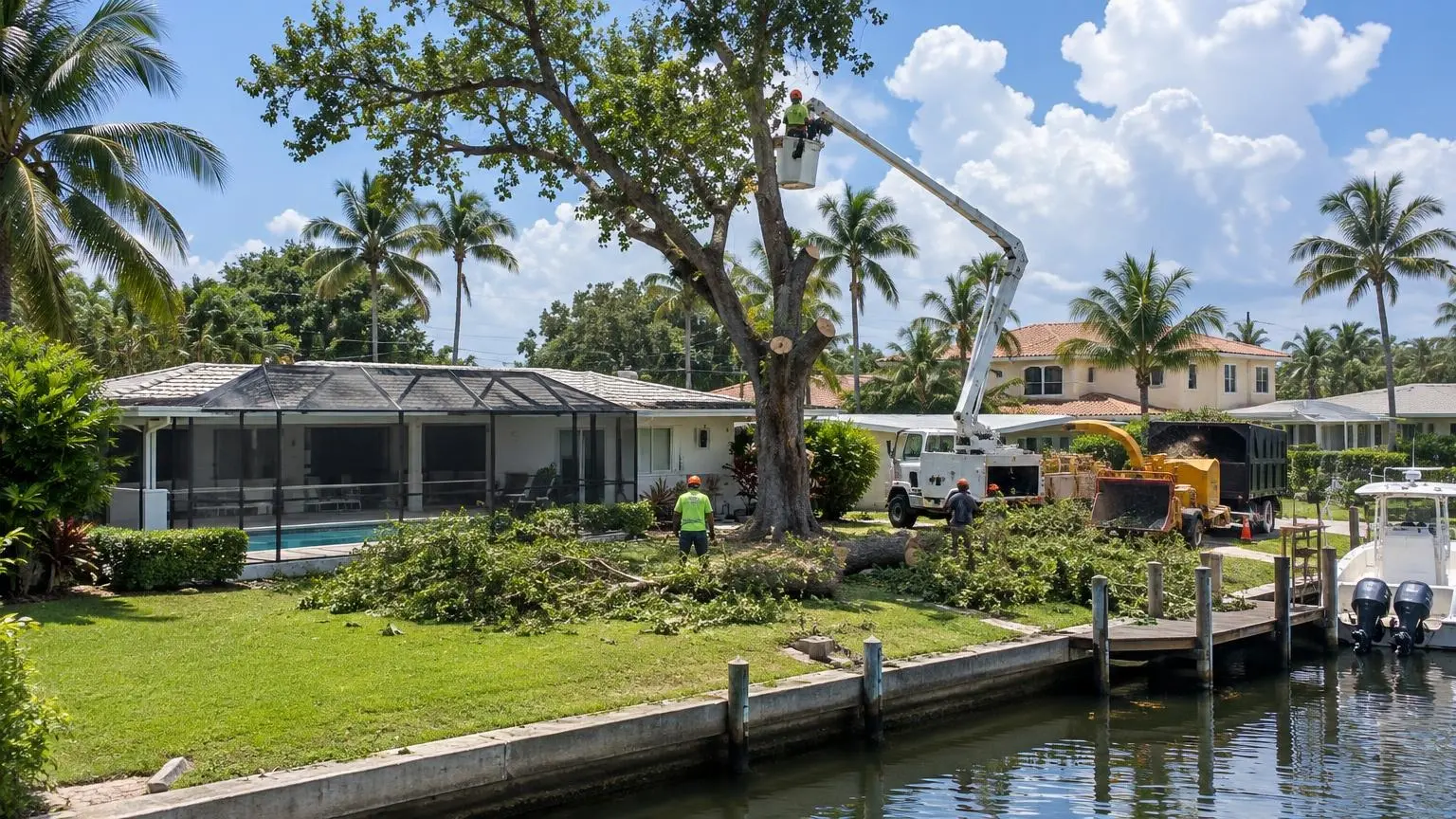
Dead and hazard tree removal is the planned version of storm cleanup. In Fort Lauderdale, a tree that is going to fail usually gives warning: a dead top, mushrooms at the base, a crack running down the trunk, a hollow sound when knocked, or a lean that was not there last year. Taking that tree down on a calm day, with room to rig every piece, is safer and usually costs less than pulling it off a roof after a hurricane.
Warning signs we look for
Dead wood in the crown and bark falling away from the trunk. Fungal conks or mushrooms at the root flare, which often mean decay in the roots or lower trunk. Cracks and seams, especially where two trunks meet in a tight V. Roots cut by a driveway, pool, seawall or irrigation project; UF researchers note that shallow-rooted trees are especially likely to die or fall over after construction disturbs the soil around them. Soil heaving or cracking on one side of the trunk. And for palms, a collapsed or brown spear leaf.
Species that fail here
UF/IFAS hurricane studies rank black olive, laurel oak and strangler fig in the lower half for wind resistance, and Australian pine, weeping fig, queen palm, Washington palm and Norfolk Island pine near the bottom. In older Fort Lauderdale yards, ficus planted as shade trees or hedges have often grown far larger than the space they were given. A hazard tree is the combination of a weakness and something to hit: a cracked limb over the pool cage matters more than one over an empty side yard.
Florida's risk-assessment rule
Florida Statute 163.045 matters a lot for hazard trees. On a single-family home lot, a city cannot require a permit, fee or replacement tree if the owner has documentation that the tree poses an unacceptable risk to people or property. The documentation must be an on-site assessment following ISA tree risk assessment procedures, signed by an ISA Certified Arborist or a Florida licensed landscape architect, and it has to show that removal is the only practical way to bring the risk below moderate. If you think your tree qualifies, we can explain what the assessment involves; you arrange it with the arborist or landscape architect, and keep a copy with your records.
Dead trees get worse with time
A dead tree dries and turns brittle, and in South Florida's heat and humidity, decay moves quickly. Limbs that would bend on a live tree snap on a dead one, which makes climbing and rigging less predictable. The sooner a dead tree comes down, the more options there are for doing it safely.
Hazard Work We Handle
These are the most common hazard removals on Fort Lauderdale properties.
Dead tree removal
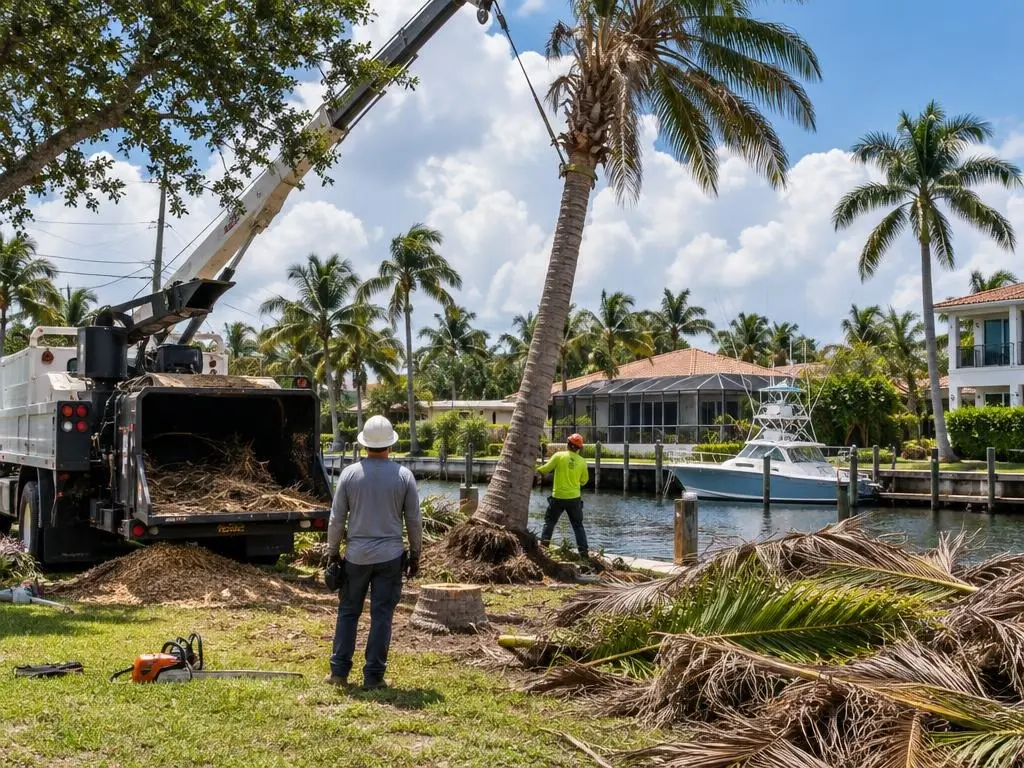
Fully dead hardwoods and palms taken down before brittle wood makes the job harder.
Decayed and hollow trees
Trees with rot at the base, cavities or fungal growth that undermine their strength.
Cracked and split trunks
Trees with seams or splits, often at weak V-shaped unions between trunks.
Root-damaged trees
Trees whose roots were cut by construction, pools, seawalls or utility work.
Leaning trees
Trees with a new or worsening lean toward a house, cage or street.
Hazard Tree Removal Cost Guide
| Item | Published range |
|---|---|
| Diseased tree with soft, breakable wood (Angi, 2026) | $400 to $900 |
| Average tree removal (HomeGuide, 2026) | $400 to $1,200 |
| Large tree 60 to 80 ft (HomeGuide, 2026) | $850 to $2,000 |
| Arborist report, when required (Angi, 2026) | About $860 average |
| Yearly arborist health check (Angi, 2026) | About $150 per visit |
National figures from Angi and HomeGuide. HomeGuide notes dead trees often cost more to remove because of added safety risk. Your written estimate is the price.
What Happens on the Day
1. Inspect
We look at the crown, trunk, root flare and soil, and at what the tree could hit.
2. Explain the options
Removal, reduction pruning or monitoring, and whether a permit or a risk assessment applies.
3. Price in writing
Method, cleanup, stump and price for each tree, in writing.
4. Controlled removal
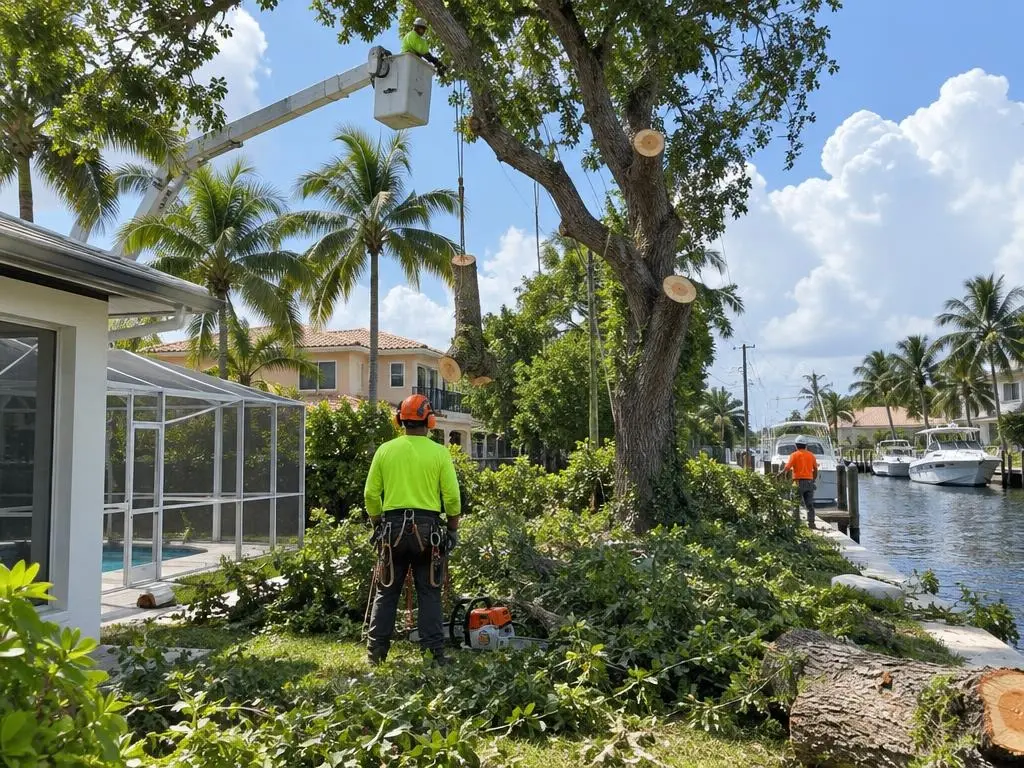
Weak or dead wood is rigged and lowered with extra care, since it can break unpredictably.
5. Final cleanup
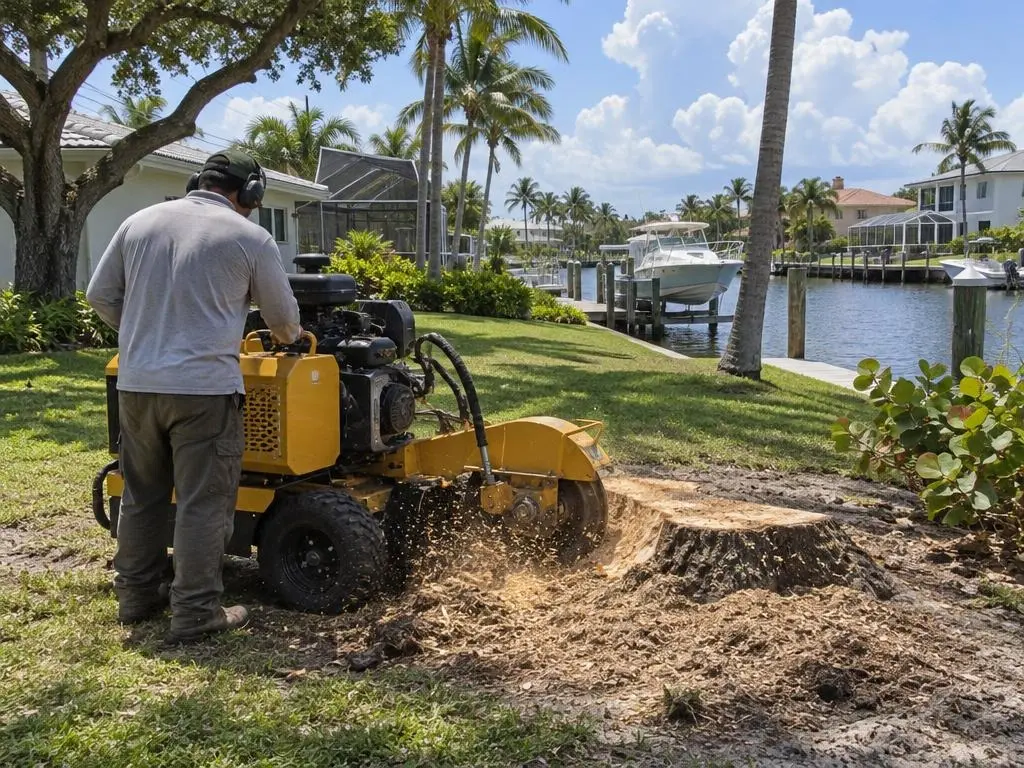
Wood and brush hauled, stump ground if you chose it.
Why Choose Us for Dead & Hazard Tree Removal
We tell you when a tree is fine
Not every lean or mushroom means removal; if pruning or watching it is reasonable, we say so.
Extra care with brittle wood
Dead and decayed trees are rigged more conservatively than sound ones.
Dead & Hazard Tree Removal Questions
How do I know if a tree is dangerous?
Look for dead branches in the crown, mushrooms or conks at the base, cracks in the trunk, cavities, and a lean that is new or getting worse. Then look at what is under it. A weak tree over the house, the driveway or the pool is a bigger concern than one in an open corner.
Can I remove a dangerous tree without a city permit?
Under Florida Statute 163.045, yes, if the property is a single-family home and you have a signed on-site assessment from an ISA Certified Arborist or a Florida licensed landscape architect showing the tree is an unacceptable risk. The city also cannot require you to replant.
Is a dead tree more expensive to remove?
Often a little, because dead wood is brittle and has to be lowered more carefully. HomeGuide notes that dead trees often cost more to remove because of the added safety risk. Removing it before it gets more brittle helps.
Should I remove a hazard tree before hurricane season?
Yes, if you can. The Atlantic hurricane season runs June 1 through November 30. Scheduling hazard removals in winter or spring avoids the rush and the risk of the tree failing first.
Dead & Hazard Tree Removal Service Areas
- Tree Removal in Fort Lauderdale, FL
- Tree Removal in Hollywood, FL
- Tree Removal in Pembroke Pines, FL
- Tree Removal in Miramar, FL
- Tree Removal in Coral Springs, FL
- Tree Removal in Davie, FL
- Tree Removal in Plantation, FL
- Tree Removal in Sunrise, FL
- Tree Removal in Pompano Beach, FL
- Tree Removal in Deerfield Beach, FL
- Tree Removal in Weston, FL
- Tree Removal in Lauderhill, FL
- Tree Removal in Tamarac, FL
- Tree Removal in Margate, FL
- Tree Removal in Coconut Creek, FL
- Tree Removal in Cooper City, FL
- Tree Removal in Dania Beach, FL
- Tree Removal in Hallandale Beach, FL
- Tree Removal in Oakland Park, FL
- Tree Removal in Wilton Manors, FL
- Tree Removal in Lighthouse Point, FL
- Tree Removal in Parkland, FL
- Tree Removal in Southwest Ranches, FL
- Tree Removal in Lauderdale-by-the-Sea, FL
- Tree Removal in North Lauderdale, FL
Get a Dead & Hazard Tree Removal Estimate
Free estimates for dead and hazard tree removal.